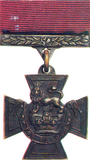
Robert Edward Dudley Ryder
Commander, Royal Navy
- Register No.
- 1097 (Alf's numbering, from The Register of the Victoria Cross, 1997)
- Rank
- Commander all Commanders →
- Unit
- Royal Navy (register: HMS Campbeltown) all HMS Campbeltown VCs →
- Date of action
- 28 March 1942 on this day → all of 1942 →
- Conflict / campaign
- Second World War
- London Gazette
- 21st May 1942 on this day → all of 1942 →
- Born
- 16th February 1908 in India
- Died
- in the English Channel on the 29th June 1986
- Memorial / grave
- Headington Crematorium, Oxford
- Medal held by
- the Imperial War Museum, Kennington, London
Digest of citation
Commander Ryder commanded a force of small unprotected ships during the attack on San Nazaire, France, on 28th March 1942. He led HMS Campbeltown under intense fire from short-range weapons at point-blank range. The main object of beaching HMS Campbeltown had been accomplished, but Commander Ryder remained on the spot for one hour and 16 minutes, conducting operations during the evacuation of the Campbeltown's men, dealing with enemy strong points and close-range weapons, all the time being exposed to heavy fire. He didn't retire until the ship could be of no further use in the rescue of the commandos who were still ashore. It was almost a miracle that his motor gunboat, although full of dead and wounded, had survived and was able to withdraw through an intense barrage of close range fire
From Alf Askin's research notes
Reproduced as Alf wrote it, c. 2000–2005. Spelling and abbreviations are his own.
RYDER, Robert Edward Dudley. (reg No. 1097).
Commander. Royal Navy.
London Gazetted on 21st May 1942.
VC Medal's Custodian is the Imperial War Museum, Kennington, London.
Born on 16th February 1908 in India.
Died in the English Channel on the 29th June 1986.
Memorial at Headington Crematorium, Oxford.
Digest of Citation reads: Commander Ryder commanded a force of small unprotected ships during the attack on San Nazaire, France, on 28th March 1942. He led HMS Campbeltown under intense fire from short-range weapons at point-blank range. The main object of beaching HMS Campbeltown had been accomplished, but Commander Ryder remained on the spot for one hour and 16 minutes, conducting operations during the evacuation of the Campbeltown's men, dealing with enemy strong points and close-range weapons, all the time being exposed to heavy fire. He didn't retire until the ship could be of no further use in the rescue of the commandos who were still ashore. It was almost a miracle that his motor gunboat, although full of dead and wounded, had survived and was able to withdraw through an intense barrage of close range fire.
Additional information:. Captain Ryder was made Naval Attaché in Oslo from 1948-50, when he became a Member of Parliament for Merton and Morden until 1955. He wrote two books, 'The Attack on San Nazaire,' and 'Coverplan.'
Updated:15.08.03
Additional information
Captain Ryder was made Naval Attaché in Oslo from 1948-50, when he became a Member of Parliament for Merton and Morden until 1955. He wrote two books, 'The Attack on San Nazaire,' and 'Coverplan.' Updated:15.08.03
Visit the grave or memorial
Alf recorded the memorial as: Headington Crematorium, Oxford
Map links open a search for the place name Alf recorded; please check opening times and exact locations before travelling. Many VC graves have since been restored by the Victoria Cross Trust.
Research this recipient further
Would you like to honour Robert Edward Dudley Ryder by sponsoring this page from £1 a month — in memory of someone, in your own name or for your company? Sponsor this page.